Industry
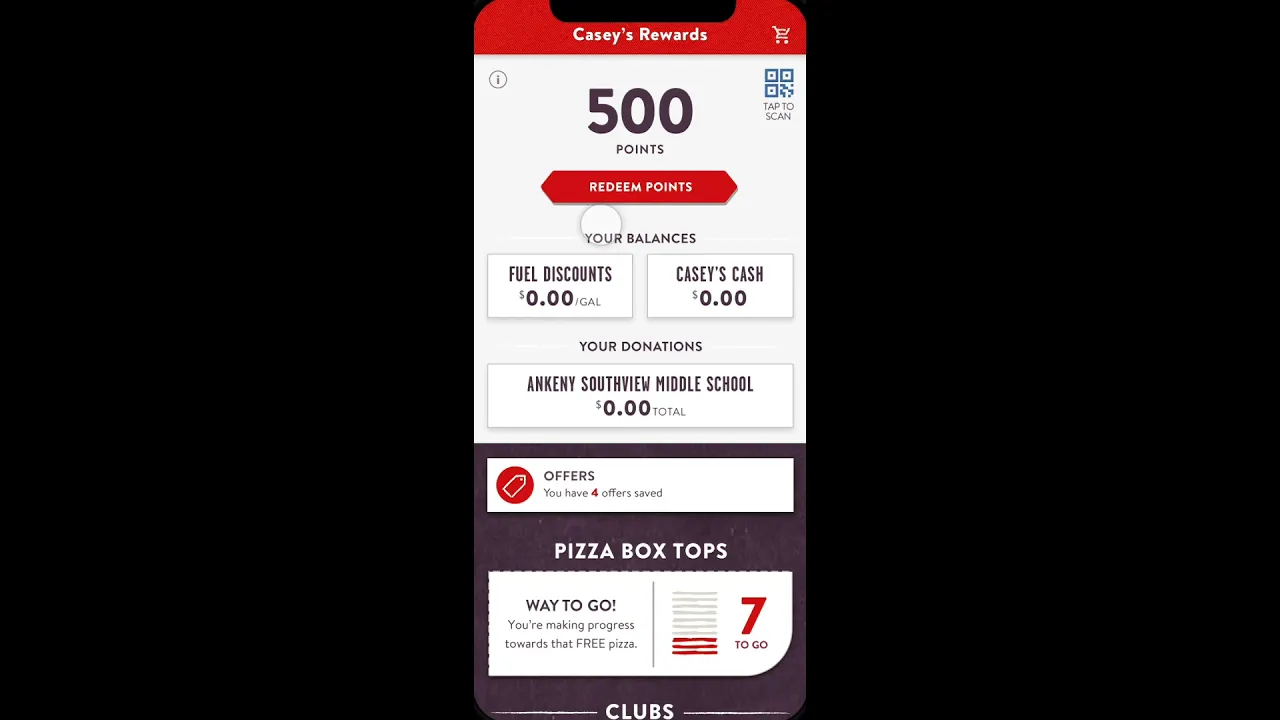
The loyalty program I introduced was a combination of 3 concepts that all worked in tandem with each other. These concepts all played into the brand familiarity customers had and drove enrollment to the mobile app experience resulting in 50% of the total business revenue
+177,000 Reviews
ONBOARDING
This project had been ongoing prior to my joining the team. The client had started by originally asking for the design team to come in and redesign their digital presence - app, website, and digital marketing, after a successful start to the project, the scope was broadened to include a new loyalty component. This is when I and a couple of other members of the team were brought in to help research, design, and implement this new offering. The main goals of the loyalty portion were to enhance the experience for customers, promote customer acquisition and promote growth in average checkout size. The client had expressed their customers were expressing great interest in a loyalty program as well.
As part of the work done before I started, the team had worked with stakeholders and customers to define personas for the customer types of Casey’s:
BOOTS ON THE GROUND
Competition
Before we set out to see what our customers were interested in from a loyalty program, we took to the competitors to see what they were offering their customers in terms of features, rewards, discounts, and the like. The competitors we set our sites on were Panera Bread, BP Gas, Starbucks, Pizza Hut, and 7/11. Each of these 5 are unique in how they compare to Casey’s, some are obvious direct competitors while others have similar offerings to the Casey’s brand.
Panera Bread
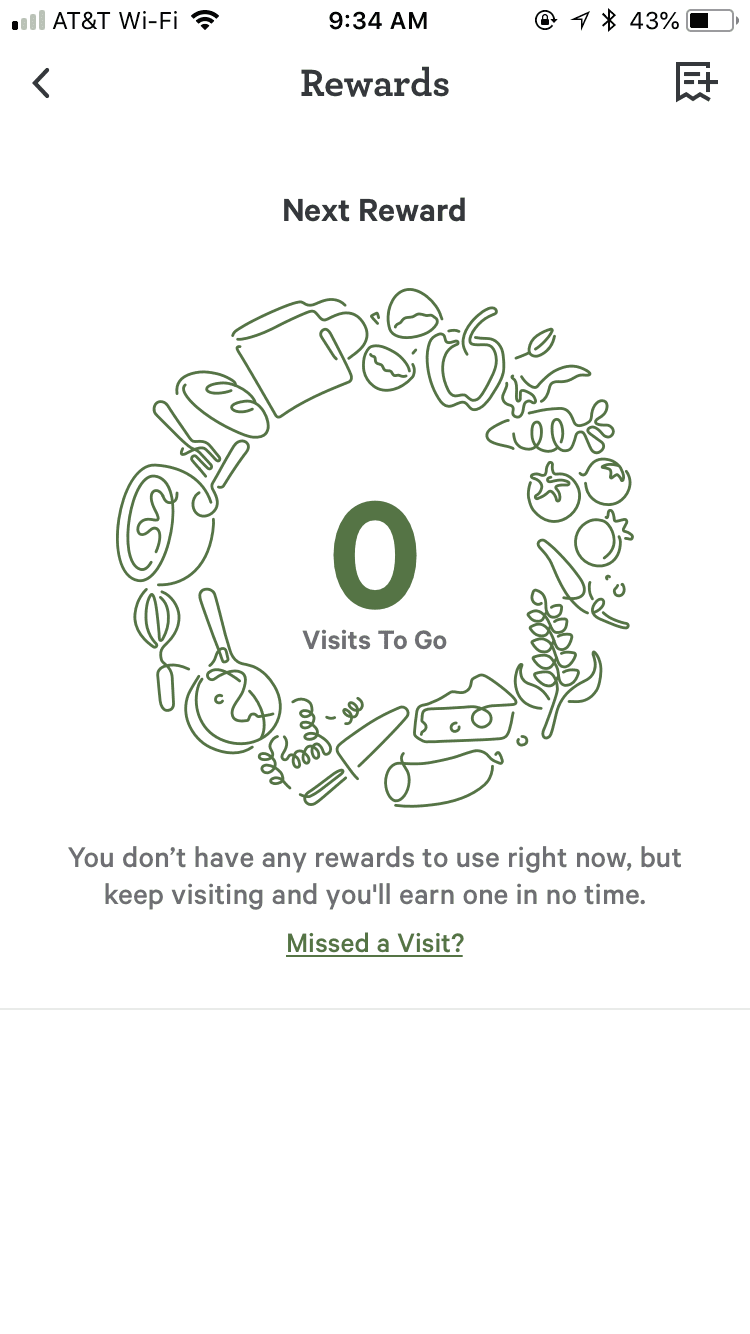
Panera Bread offers a rewards program that enables customers to earn rewards based on the number of times they visit and purchase food at a participating location. The predominant feature of the app is for ordering food while the rewards are a secondary bonus to the customer’s experience. Customer rewards were fairly straight forward and consisted of free items after enough visits/checkouts. Customers also received a birthday gift as part of a surprise & delight mechanic of the app to encourage dining at a Panera Bread.
BP Gas
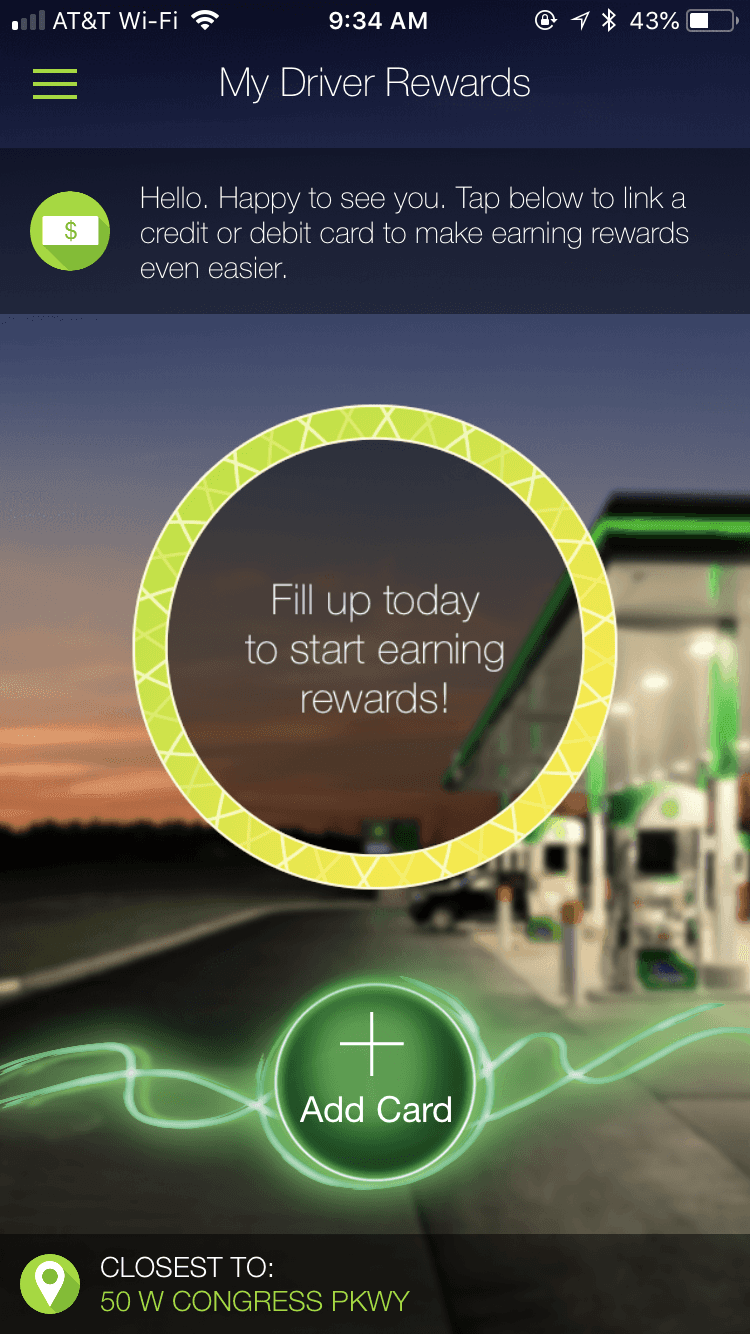
BP’s approach to rewards was fairly lax and not as impressive as its competitors. BP focused on a points-based system where customers exchange saved points earned through spending on fill-ups for cents off per gallon on their next chosen fill-up. This rewards offering did not apply to the in-store convenience area of the BP brand, which customers reflected their discontent for this with low reviews on app stores. The app had a 2.3-star rating on iOS and a 2.9-star rating on Android.
Starbucks
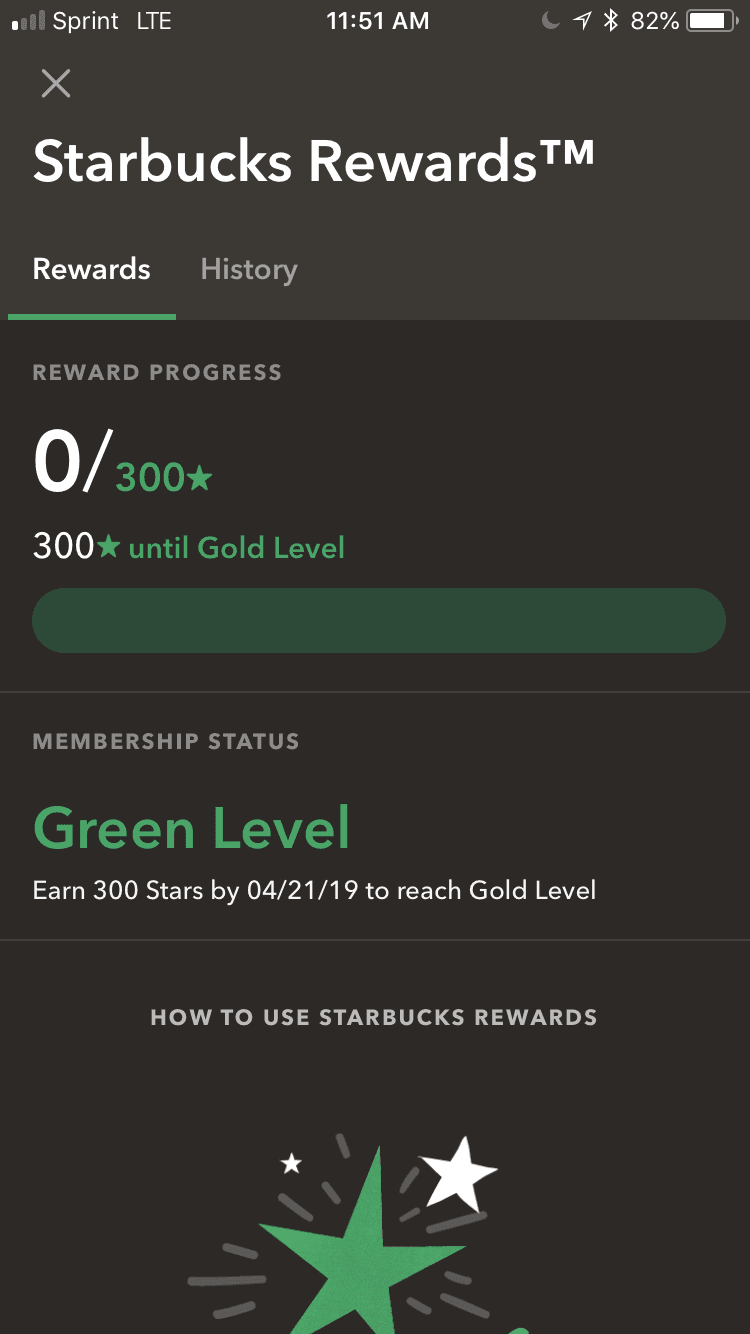
Starbucks at the time was easily the most well-known rewards program of all the competition in the United States, boasting 1.87 million reviews on the iOS app store. Along with its popularity, Starbucks also had the most feature-rich experience for its customers. The app offered customers a variety of rewards based on a points system that they could redeem at any time, the earned points would also contribute to a tier system that unlocked new rewards the farther up a customer climbed (silver, gold, platinum, etc.).
Pizza Hut
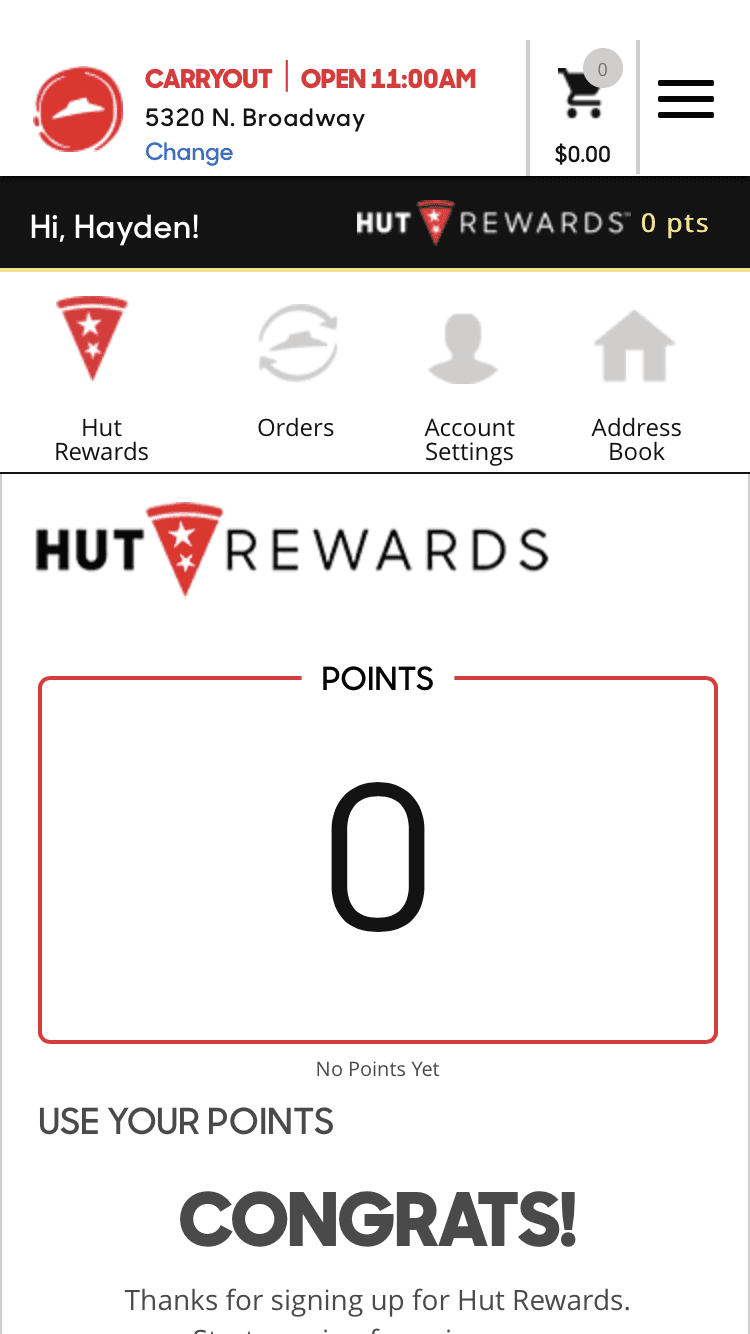
Pizza Hut offers a fairly simple points-based system that allows users to earn points based on basket size and later redeem those points for items on their next orders. These rewards ranged from small items to entire pizzas, we found that this was fairly similar to other large pizza chains in the midwest region.
7/11
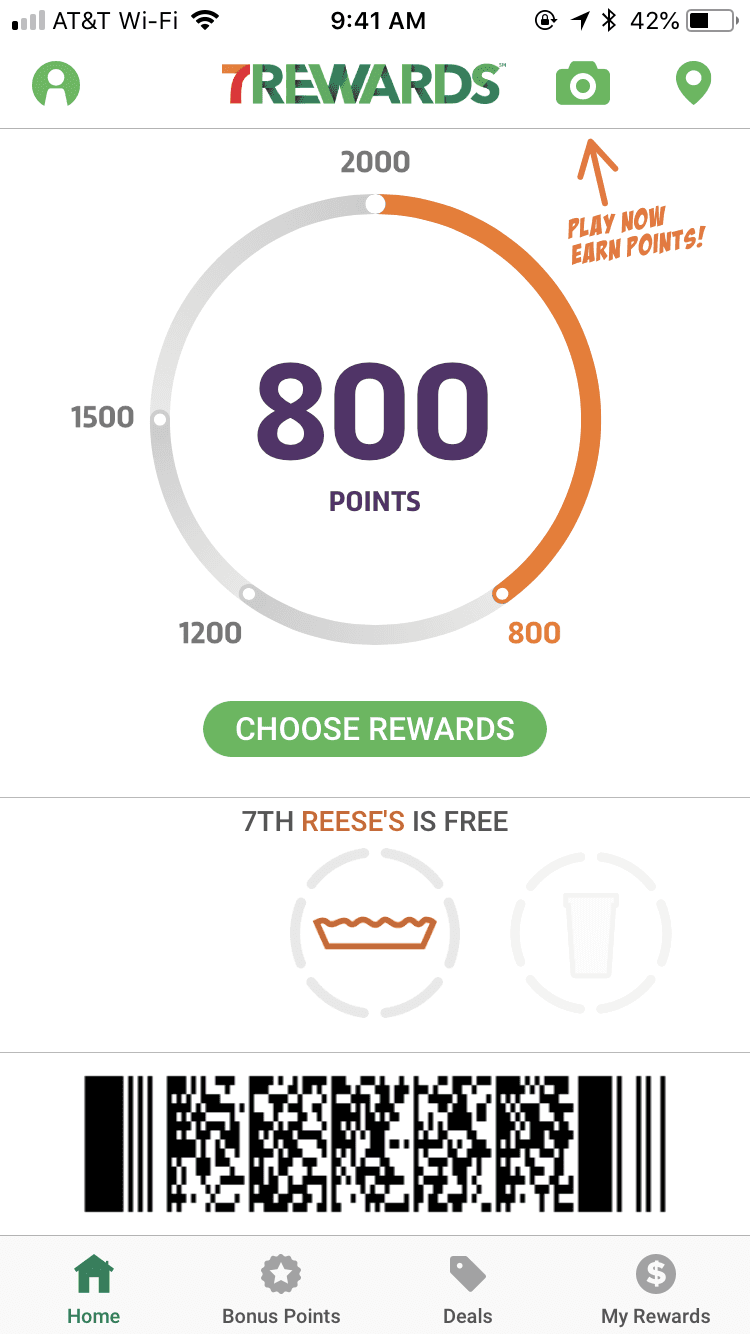
7/11 had a more elaborate system than a lot of the list, they offered a points-based tier system. Meaning that a user earns points based on basket size and unlocks new sets of rewards based on which tier of points they reached, incentivizing them to save up their points for the bigger ticket items. In addition to this system 7/11 also has a visit-based branded section of rewards where a customer will earn ‘n’th item for free - ‘7th Resee’s is free’ for example. To round out their rewards system, which not only helped with acquisition but also customer frequency rate was an exclusive member-based offers system where members of the loyalty program could find and add exclusive offers to their account on instore products.
Define and Refine
To further understand what the customers were hoping to get out of a loyalty program we put together 3 early concepts of what the experience would become based on the initial stakeholder debrief and competitive research and set out to do in person guerilla-style interviews inside Casey’s General Store locations with both customers and employees of the brand. The 3 concepts we had drafted were:
When we took these out in front of customers and employees we received a lot of positive reinforcement about the directions we were headed in, showing that what we had assumed based on the personas was helping push us in the correct direction. Some interesting pieces of information we had gathered were:
Ranks
Consistently customers ranked our concepts from first to last in the same order - Work Hard Rewards, Community Causes, Your Inner Circle
01
Average Visits
Customers were often visiting the store 2-3 times per week on average, saying they would receive a lot of value from a loyalty program
02
Customer Behaviors
There was a high connection to naming the points “Casey’s Cash”, a lot of customers claimed they had a strong connection to money more than points.
03
We also heard some interesting things during our interviews that helped to back up the information we had learned:
We took these findings back to our clients who were understandably ecstatic that their customers were just as excited as them to have a loyalty program introduced into the Casey’s brand. Our initial goal was to work with our client to have them decide on a single concept and move forward with the one, but after hearing positive things about the three different directions of the loyalty program our stakeholders decided to invest time into each of them and wanted to see designs for each.
IT'S DESIGN TIME!
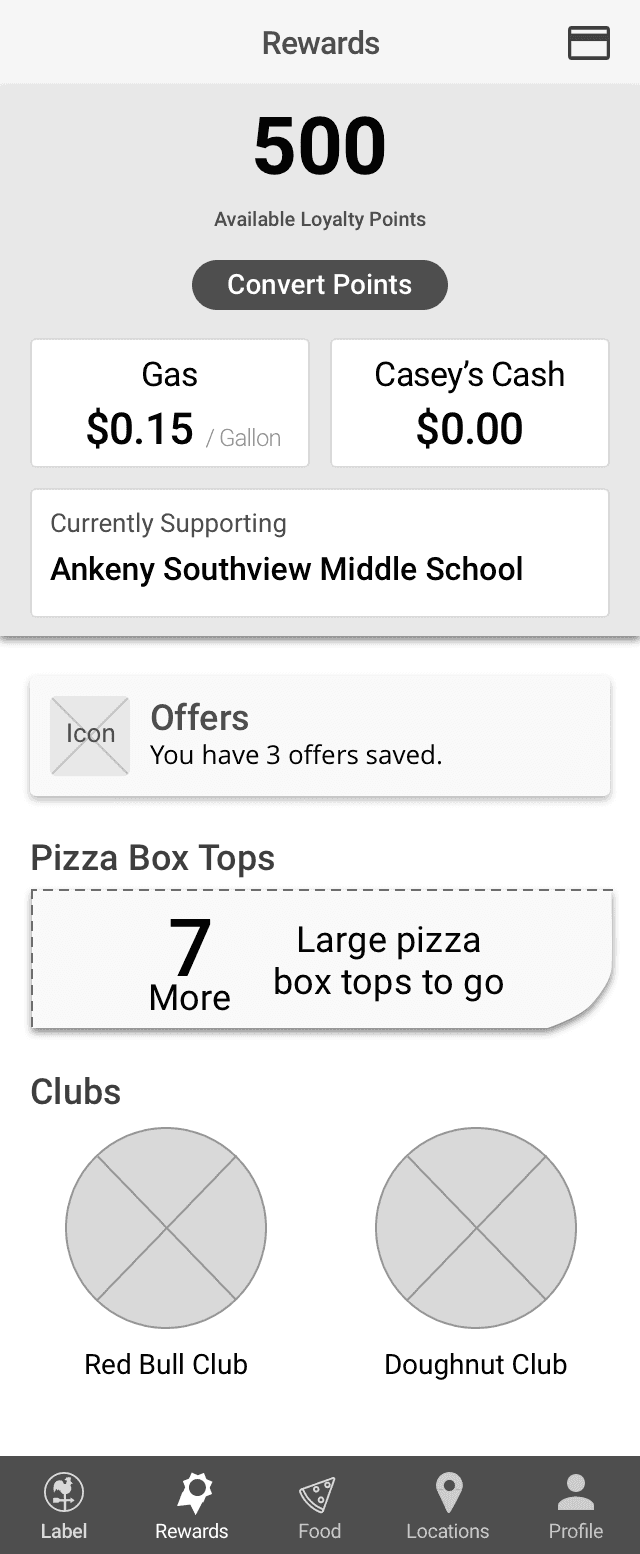
Initially, I took to all 3 concepts we had come up with as distinct versions of the loyalty app. The app’s baseline points for rewards had been relatively similar throughout all 3 definitions of the design but the individual concepts all had their own flavors and uniqueness. These early designs and concepts started to share aspects from each other and as I would continue to show these to the stakeholders and my creative director we all came to the similar conclusion that maybe 3 individual ideas wasn’t the right way to be pushing this. Rather than try to force 3 different concepts to be highly unique, we ultimately decided to dumb down the concepts into their base components and create a single concept that included bits and pieces of all 3. Work Hard Rewards became points that then could be converted by the customer into Casey’s Cash or a Fuel Discount. Community Causes was streamlined to be a tool that customers could use to donate their points to a local school. Your Inner Circle went through a handful of iterations but landed on becoming a referral option for customers to invite their friends and family to join Casey’s Rewards for bonus points.
An important note here is that a customer's unique account number needed to be generated in a way that was easy to remember in the event that they didn’t have a smartphone, maybe left their phone at home, or just didn’t want to download the new app, even though that was our main goal of this project. It was decided that the unique identifier we were going to use was a customer's phone number, a simple 10 digit unique code a customer could enter on the card reader of a PoS to use their loyalty and always be earning rewards. To help compete with the other loyalty programs we were up against, having just points and rewards earned through in-store purchases wasn’t going to be enough to satisfy our customers. We were going to need some additional features and standouts to help enrich the experience.
Pizza Box Tops
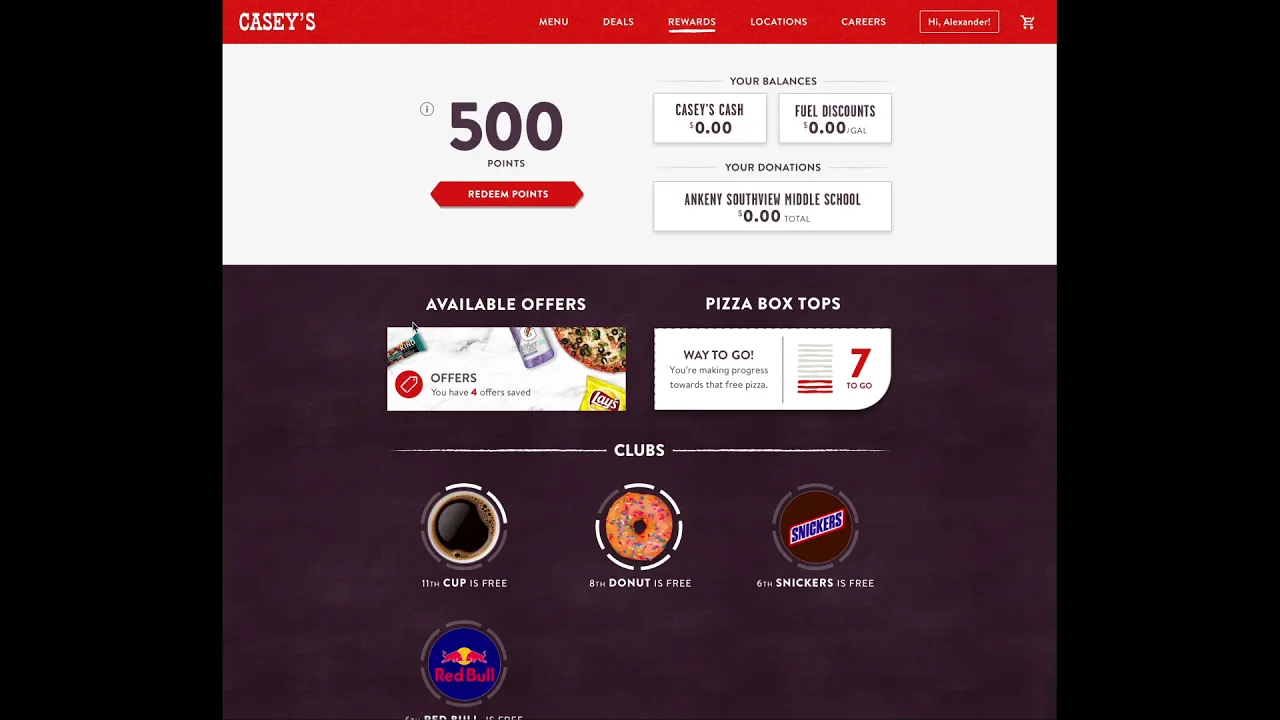
Pizza Box Tops are a major brand pillar to Casey’s General Store. They are a tradition that loyal customers have known since they first started shopping at Casey’s so it only makes sense that we incorporate these into the experience. Pizza box tops originally were pieces of cardboard a customer would rip off their box and after collecting 10 they could redeem those for a large pizza. We translated this to be a skeuomorphic portion of the rewards that users would automatically work towards when they purchase a large pizza and scanned their loyalty code at the PoS.
Offers
Offers are as straightforward as it gets, allow customers to gain access to exclusive discounts for being a part of the rewards program. Our stakeholders really wanted customers to have to earn/work for the offers so they weren’t going to be just given to you for being a part of the program, customers had to go into the app and accept them/add them to their account. To simplify this request from our stakeholder we opted for a 1 click option where when a customer clicks on the offer in the app it is automatically added to their account and will be applied to their checkout in-store when they scan their loyalty code.
Clubs
Clubs offer customers who may not have large basket sizes a chance at earning rewards from Casey’s General Store. Based on visits, clubs would give users nth item for free and allow for sponsored deals with other corporations. For instance, there was Casey’s Coffee Club where you could buy 6 coffees and your 7th was free, or a sponsored one where you purchase 5 RedBull Energy Drinks and the 6th is free.
Desktop/Mobile Web
The main goal of the project was to create an app first experience, but the client knew and we knew too that this would have to translate to a web experience as well. This was to account for rural area customers who may not have a smartphone or data service and work in tandem with their new online pizza ordering service. Customers could check rewards, add offers to their account which become bound to their phone number/account number to use in-store, order pizzas and earn their box top rewards, etc. The objective was to mimic the app look and functionality as closely as possible to create an omni-channel experience customers could access at any time. In the interest of time and client requests, we kept the new designs to a minimum, this way it would look almost identical to the app and have a lower level of design cost.
Emails
Our main goal was to create separate components that could be strung together in different configurations and templates for the marketing team to put together emails on the fly. I initially created several templates that would cover the basis for a few types of communications, new item announcements, new offers, storytelling, and informational. From there I broke apart the different components that went into each of these emails (large hero image, 3 up image with text, app download reminder, etc.) and set rules and constraints for what these components could be used for. We used these initial components and templates to make the initial marketing emails Casey’s would send out, giving a twofold use to the client. One, an email system they can continue to use from there on out, and two, a piece of learning to see how these different components can be used together
As we wrapped up our initial design phase of the app and the development was being finalized, an ask came through for component-based design of marketing emails that the Casey’s corporate market team could use to send out different pieces of marketing and specifically reminders/encouragement for customers to download the app.
OUTCOMES
EPILOGUE
This project was my first real project of length and a real test of my abilities and learnings from my time at Designation. I got to follow the tried and true design process that I had learned from the boot camp and really flex my knowledge. Personally, for a first project, I don’t think it could have gone any better, the outcomes of the project really speak for themselves, at the time of writing this the app on the iOS app store has 4.8 stars with 177,000+ ratings, and loyalty enrollments are incredibly high. This helped me learn not only great client presentation skills but it allowed me to gain confidence in the work I was producing, and defeat any feeling of imposter syndrome I had brewing up.