Genivity
Industry
ONBOARDING/CHALLENGE
Interested in improving the UX of their product, Genivity came to our team with three asks:
Evaluate
Evaluating the current HALO assessment, and provide them with professional UX recommendations.
01
Interaction
Make the PDF report from the assessment an interactive experience for advisors and their clients.
02
Learn
Gather additional research on the current user base of HALO.
03
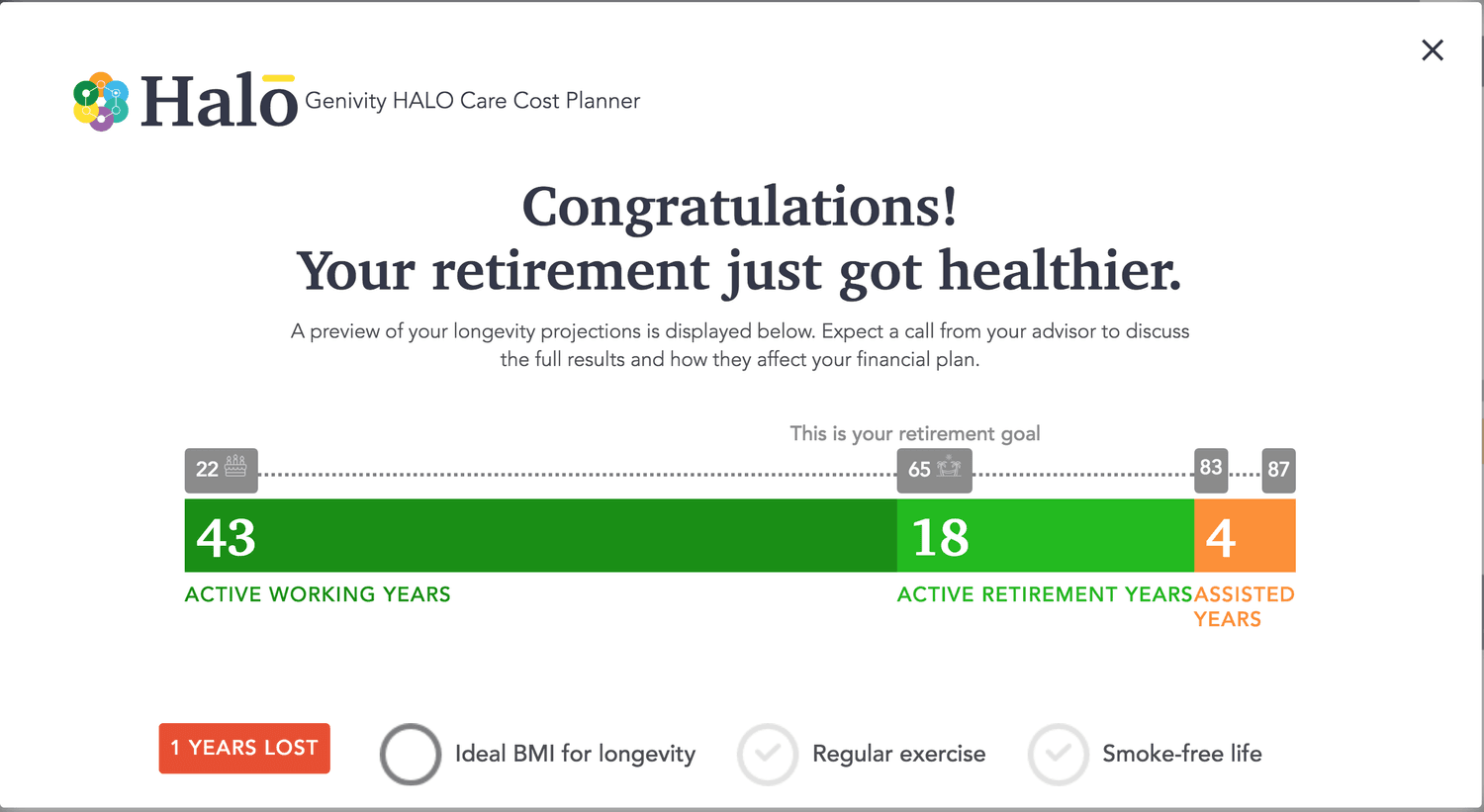
The current end screen of the client end-user assessment flow.
From the beginning, we decided that we would have to focus on the areas that needed the most work and divide our time accordingly. Breaking those 3 asks down, we decided to focus on making the PDF report interactive as our top priority. In doing so we would subsequently provide Genivity with additional research on their users, and also provide the team with the largest takeaway possible. That left the assessment, where we decided we could supply them with ample feedback for improvement through a heuristic evaluation and clients of advisors usability testing.
RESEARCH
Domain
We discovered that financial advisors would have to do a lot more than just put their clients' money in the right places. They had to carve out a niche. By providing specialized offerings, financial advisors could personalize wealth management and attract more clients.
To understand all the moving parts of wealth management, we conducted domain research on the current and future states of the financial planning industry.
Competition
By looking at offerings across the industry, I discovered that financial planning comes in two forms, robo-planning and the traditional personal in-person advising. I decided to focus on robo-planning platforms as it most closely resembled HALO. I also looked at online health insurance providers to see how they best serviced their customers. I set out to uncover how these different services broke down complex information to their varying customers.
Mint
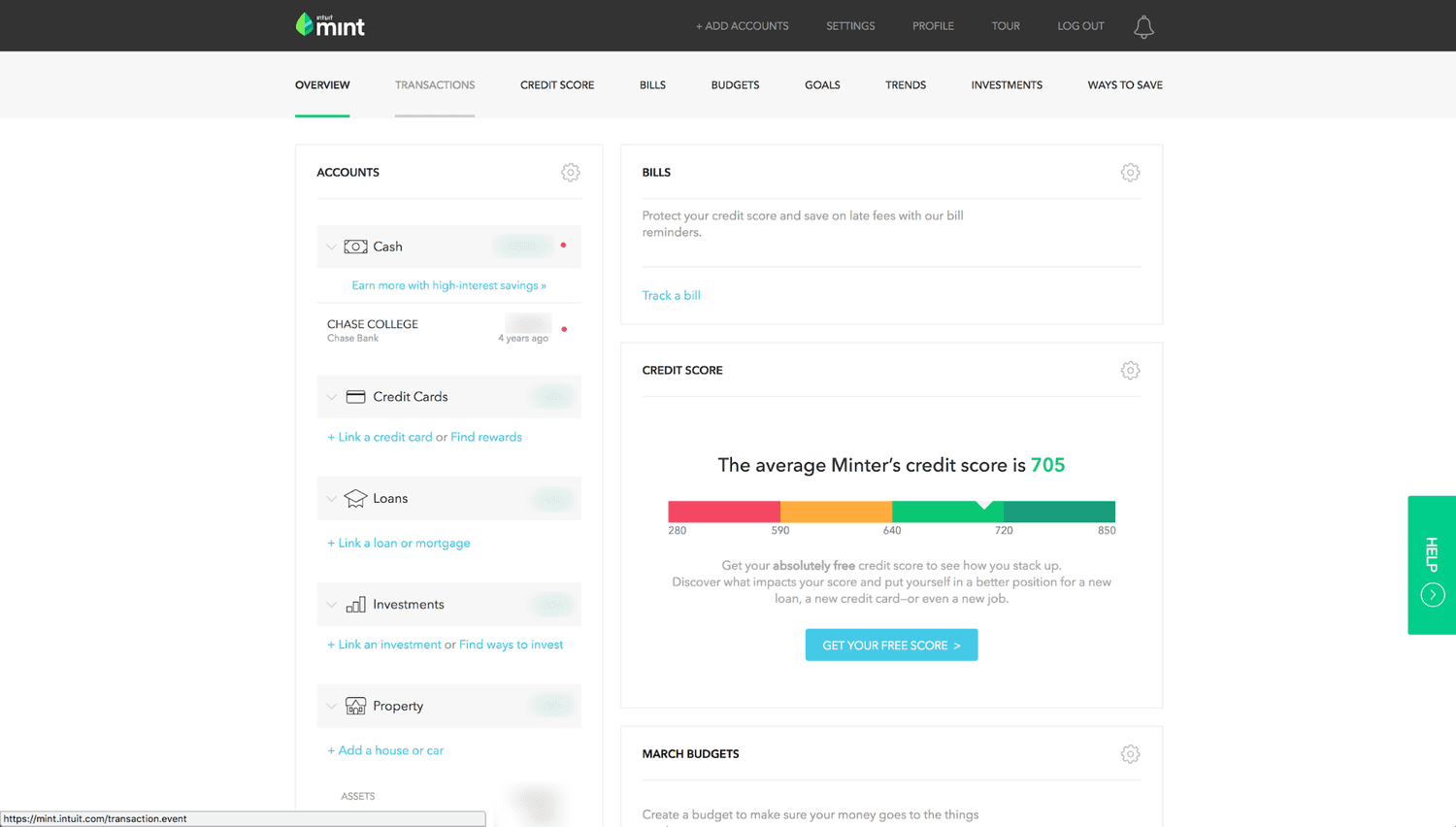
Mint is a great example of self-driven robo-advising. It gives users an overview of account information and provides ways to improve their budgeting, credit score, saving practices, and more. By providing this high-level overview and actionable financial planning strategies, Mint is able to give users more control over their futures without overburdening them with irrelevant information.
TurboTax
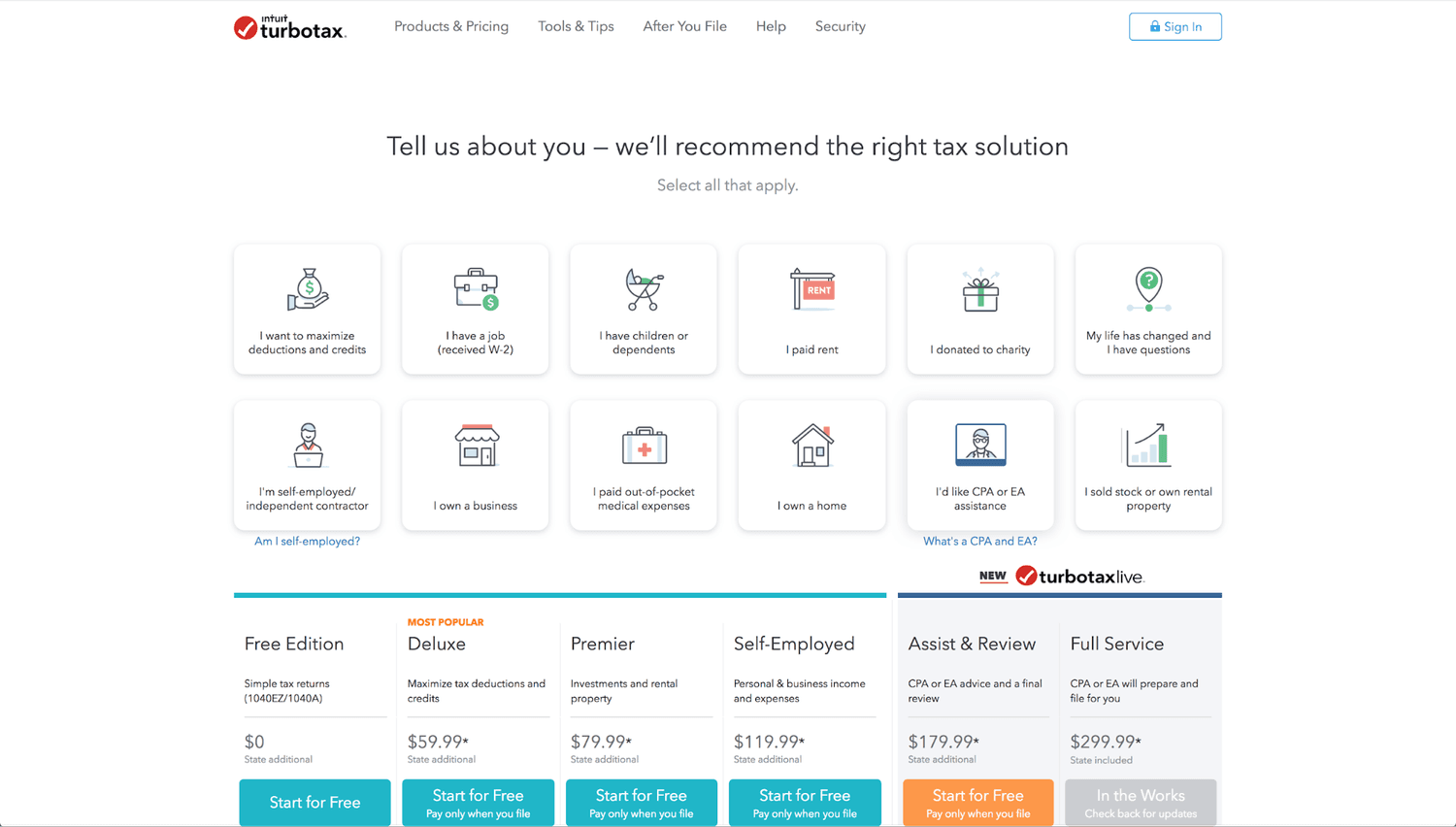
TurboTax’s is all about making doing taxes easy and accessible for everyone. This means they need to be as clear and as simple as possible. TurboTax excels by taking its users through a step-by-step process to manage their taxes and other financial documents. By offering extra bits of information along the way, users are able to indulge their curiosity or further understand what is being presented.
Oscar
Oscar makes health insurance accessible for everyday people through industry-leading customer service. Oscar provides users with a personal concierge who is there to help them choose the right plan, answer questions, and manage their account. They also break down complex options into simple insurance plans, so users can easily compare costs and features.
After looking at the different competitors, I discovered that the key to their success was in how they presented the information in a manner that was as simple and compartmentalized as possible. This showed Paul and I that HALO would need to be as clearly defined as possible, and also offer a strong hierarchical breakdown of all the information present.
User Research
We looked to HALO users for more insights on how they break down complex information and what financial planning means to them. Paul and I spoke to financial advisors and their clients, most of whom had minimal exposure to the product. We spoke to those who had little experience because we wanted to reduce the the level of previous user bias as much as possible.
We asked the clients and advisors:
How they felt about bringing up sensitive and personal topics like longevity and health status
How they broke down complex information
What contributes to a strong relationship between clients and advisors
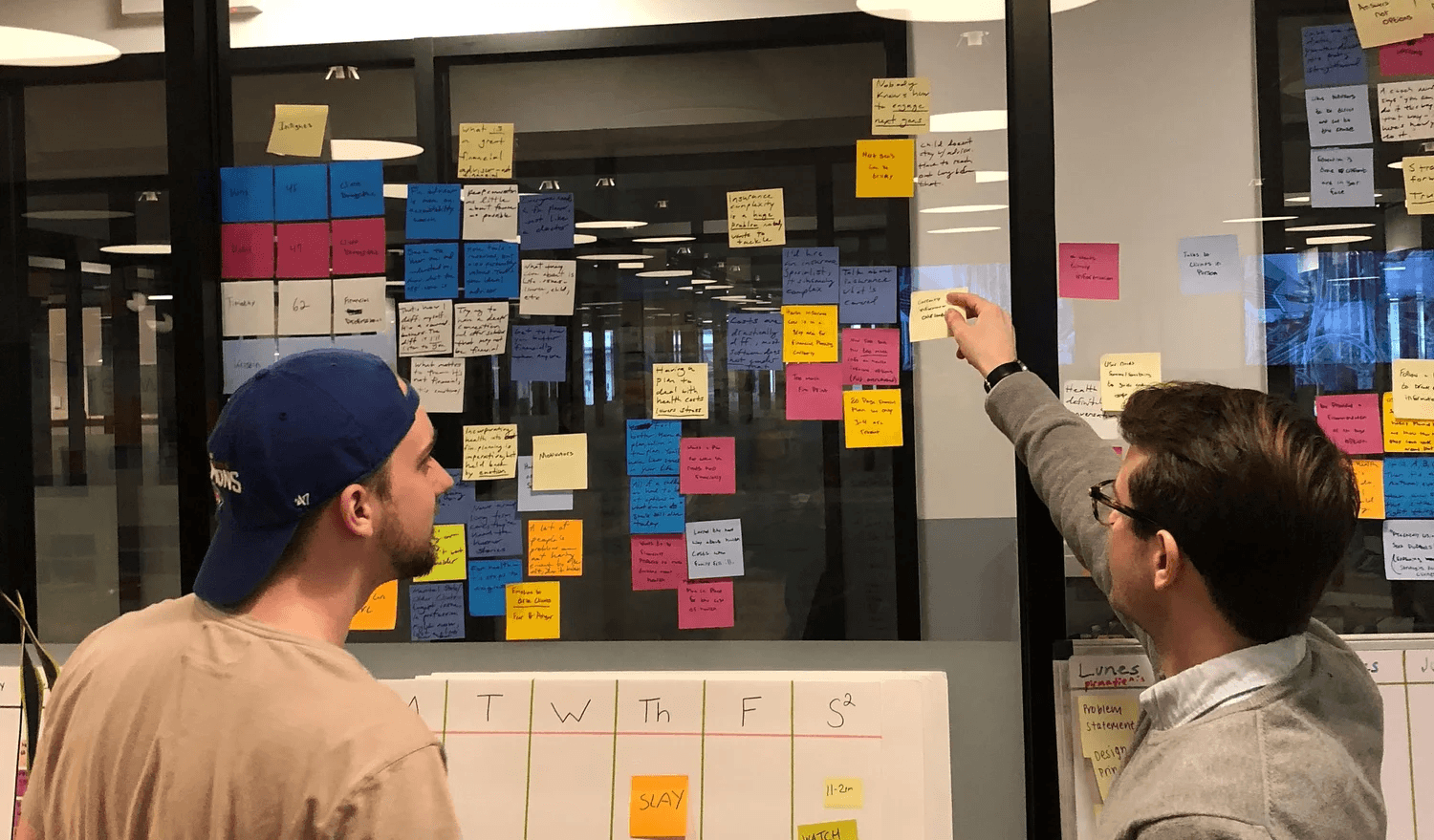
Myself and Paul affinity mapping out interview notes, diving deep to gain valuable insights on Financial Advisors and their clients
We discovered several pivotal insights from these interviews:
Trust is the biggest factor in a strong relationship.
Clients who couldn't trust their advisor would walk away. Advisors echoed that sentiment.
“You’re not talking about stuff they don’t care about… That’s when it’s really good, when you develop that trust.”
Timothy
Retirement Advisor for Sheridan Road
Clear direction empowered clients.
Clients needed someone to tell them what to do. When a financial advisor presented too many options, they felt stressed by the cognitive load. This harmed relationships between clients and their advisors.
“You gotta show leadership - show a plan, show direction. You hired me to give you choices.”
Timothy
Retirement Advisor for Sheridan Road
Clients needed complex information in bite-sized chunks.
To retain clients, advisors needed tried-and-true ways of presenting complex information in an easily digestible format. This would help clients follow through instead of second-guessing decisions.
“[The] big secret is taking complex and making it simple. Taking info, compartmentalizing it, prioritizing it, making it actionable. Taking it to the finish line.”
Kelly
Occupation President of EOS Worldwide
Clients learn too late how important it is to have a plan.
Client's process for getting financial advice and planning their futures wasn't effective. They typically went to advisors only after disaster struck.
“5 years worth of dementia leading up to his death and the care with went with that. I learned real fast how expensive that was.”
Kristin
Angel Investor
I was surprised to find that almost all of our insights were tied together in some manner. Everything related back to the relationship between the advisor and client. These insights we gathered shined a light on the fact that the relationship is symbiotic, and requires input and planning from both parties. If only one half is engaged then the result will be problematic in the end. Paul and I capitalized on this throughout our process, making sure to enable clients and advisors’ relationships to flourish.
DEFINITION OF THE PROBLEM
With a deeper understanding of clients' and advisors' mental models, we created a clearer definition of the problem we needed to solve. Genivity asked us to make the PDF interactive, but we saw the ability to build upon this, by creating a tool that would help strengthen the relationship between clients and advisors. We created the following problem statement:
The holistic advisor needs a tool that educates the client about health care costs in the context of their unique life goals.
To make sure we were addressing the needs of both parties in our problem statement, we crafted 3 design principles to keep us on target:
Our principles helped us keep both end users in mind as we ideated around ways to build stronger relationships between advisors and their clients.
CRAFTING A SOLUTION
Ideating
We set out to design solutions that would not only solve our users' problems, but also take Genivity's asks into consideration. We focused on creating interactive versions of HALO's PDF report that also strengthened relationships between advisors and their clients. In addition, I wanted to make HALO a tool that would make financial advisors smarter than their competitors. From this point we were able to create and test several divergent concepts. We tested with mostly clients but a couple advisors because we wanted to make sure we were answering the primary goal of breaking down complex information. Among our concepts were:
Baseline
What we tested
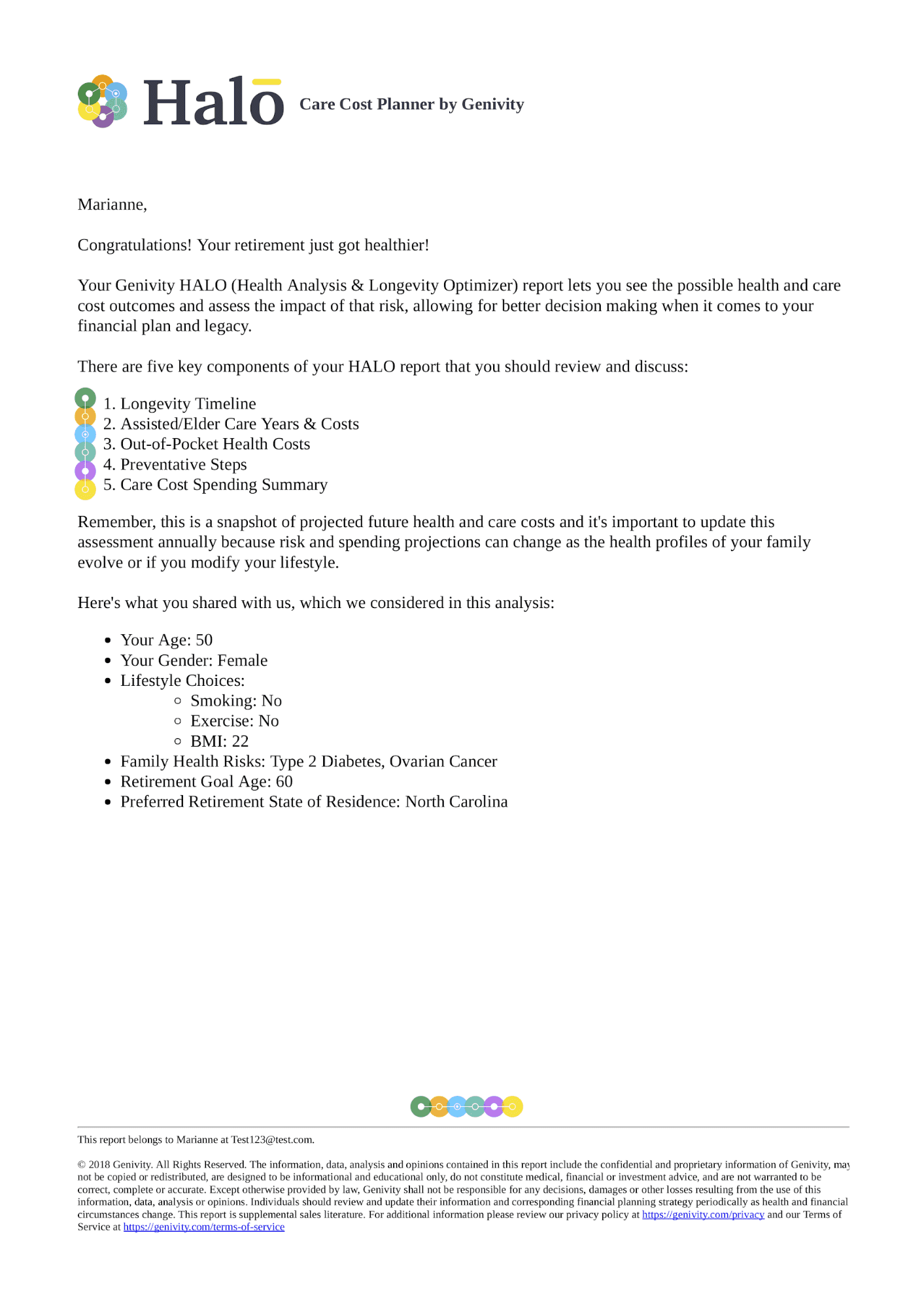
Before we began testing, I wanted to get a baseline for how clients and advisors felt about the current version of the report. We showed them the PDF and asked for their thoughts.
What we learned
Before we began testing, I wanted to get a baseline for how clients and advisors felt about the current version of the report. We showed them the PDF and asked for their thoughts.
Guided Experience
What we tested
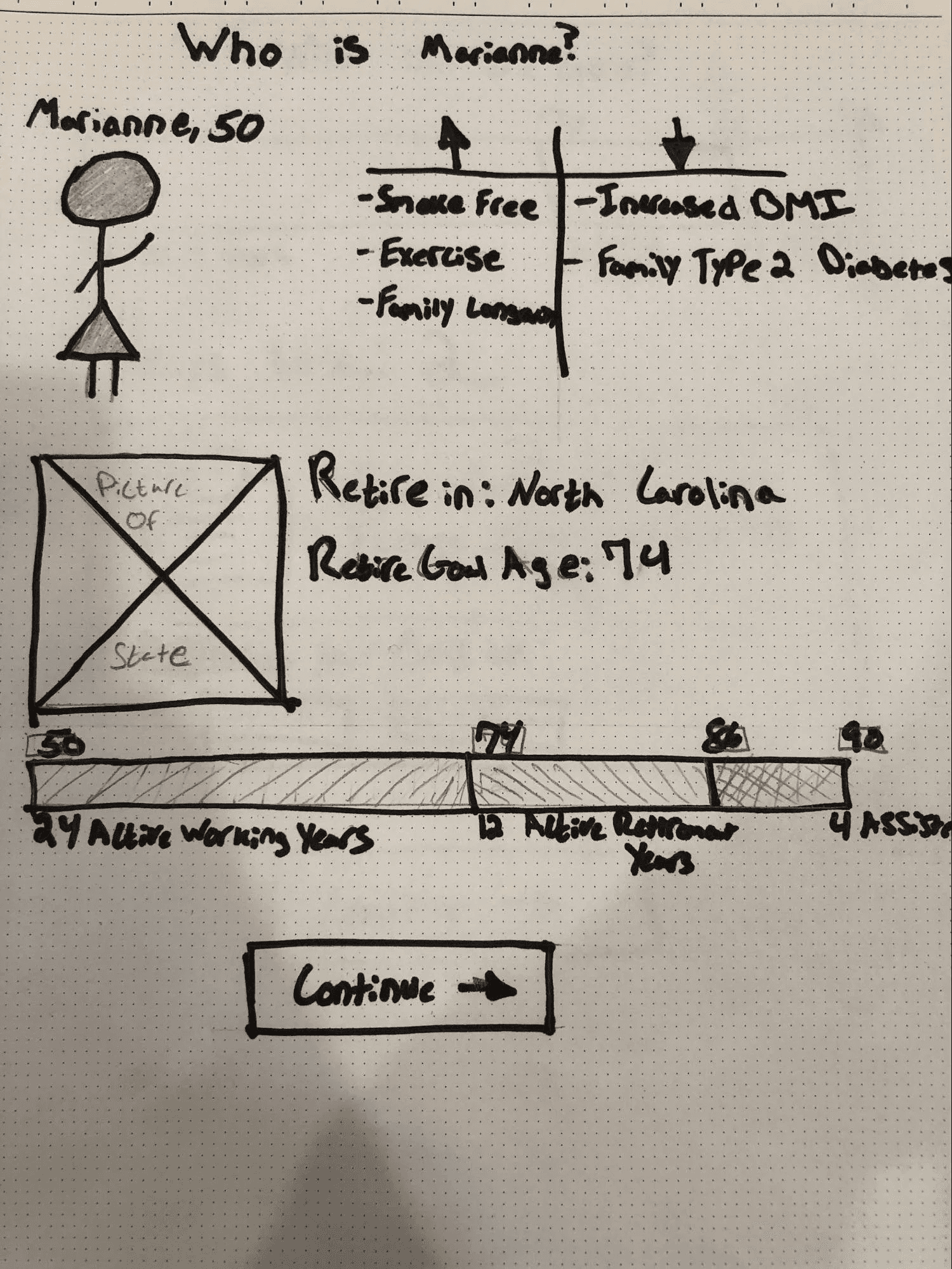
I created the guided experience to facilitate an open conversation between clients and advisors.
My concept focused on taking clients through their report in sections. This gave advisors time to explain the information on each screen. It also gave clients the room to process and ask questions.
What we learned
Clients and advisors both immediately saw the potential of a product like this. It replicated what advisors were doing in a visually intriguing way for clients, which drove engagement from both parties.
During testing, participants also asked for stronger CTAs that focused on setting up subsequent sections.
Personalized Plans
What we tested
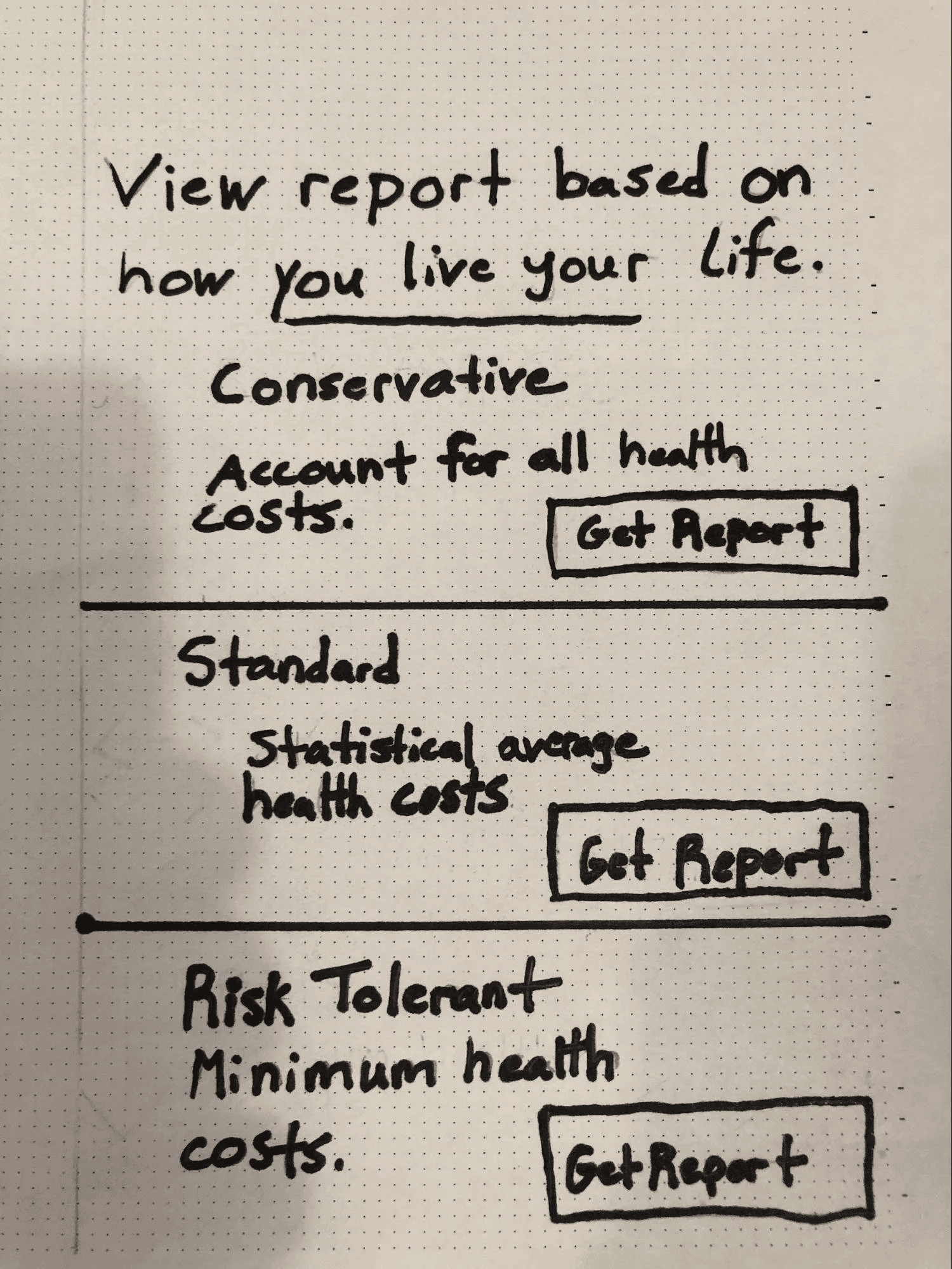
This solution offered breakdowns of potential plans for clients based on their assessment. They could then choose their favorite option and work with their advisor to move forward. Our goal for this concept was to give clients choices without overburdening them.
What we learned
Providing a small amount of choice totally resonated with clients. Advisors also felt that this concept would enhance engagement with the information they were presenting.
While clients enjoyed the personalization, we also discovered that they got confused when making decisions about their plan and needed an easy way to backtrack.
Infographics
What we tested
I wanted to also focus on a more visual manner of digesting large amounts of information, specifically through infographics. I tested to see if imagery and simple graphs were well received by clients and advisors and wouldn’t feel out of place when talking about two serious topics, health and wealth.
What we learned
Clients felt that images and graphs were interesting ways of displaying information. They were new and exciting alternatives to a text-based report. This concept wasn't strong enough to stand on its own, but we incorporated these findings from testing into our final design.
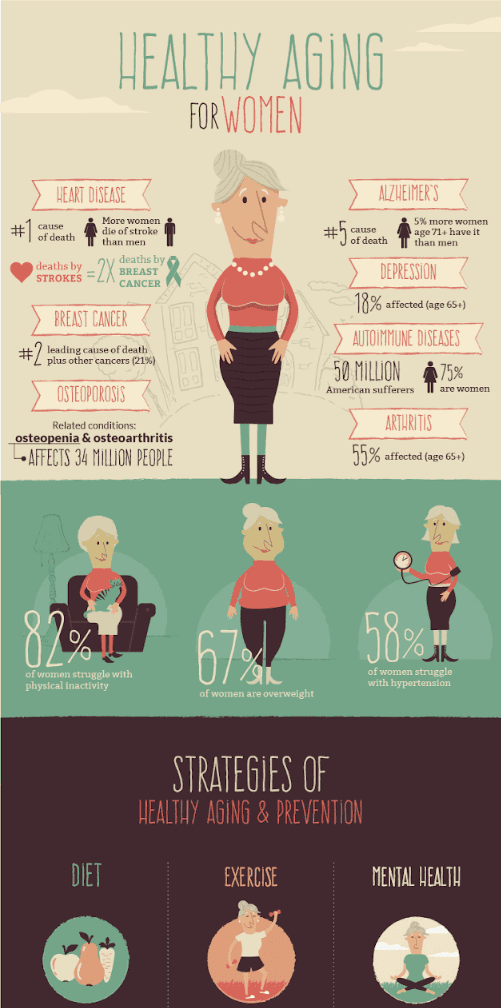
Based on our findings, we decided to move forward with the guided experience and incorporate aspects of the other concepts, such as personalization and visuals. This would help us build stronger client-advisor relationships and empower our users every step of the way.
ITERATION OUR DESIGN RECOMMENDATION
Before moving forward with our design, I wanted to understand the task flow clients and advisors would go through as they worked together.
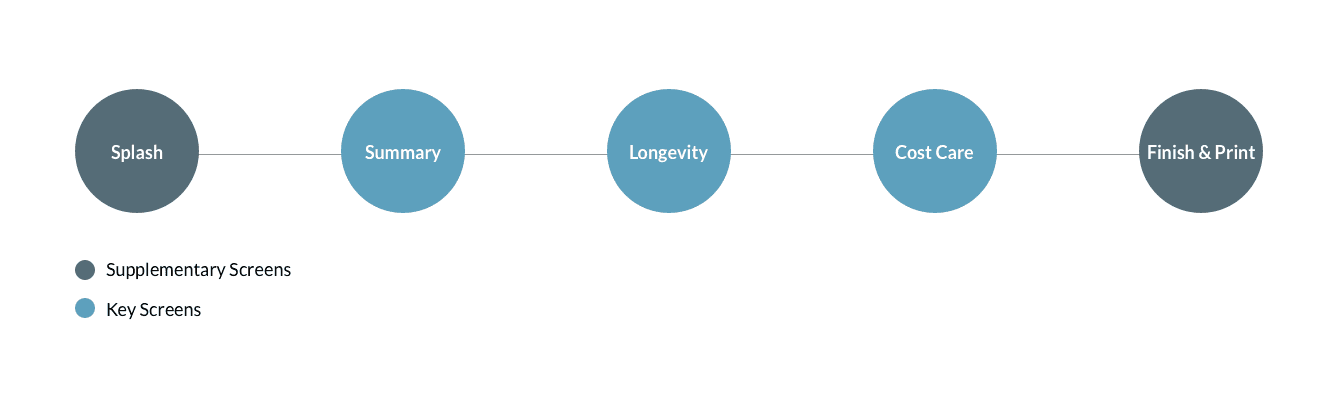
The user task flow allowed Paul and me to see how we could break down the different sections of the report, making sure we never overburdened clients with information overload.
Key Screens
Below are screenshots of the prototype we created, along with explanations of the content on the key screens.
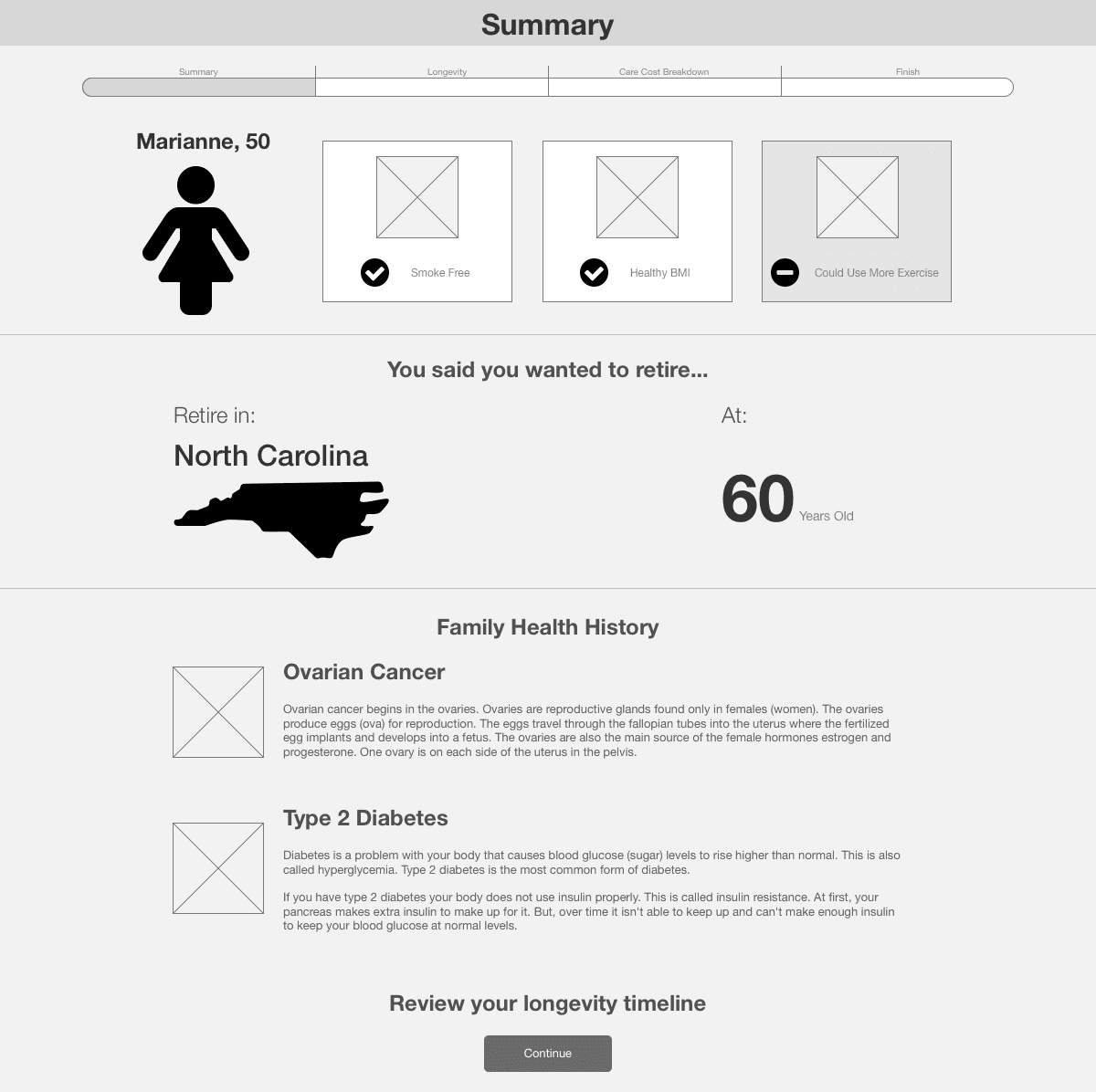
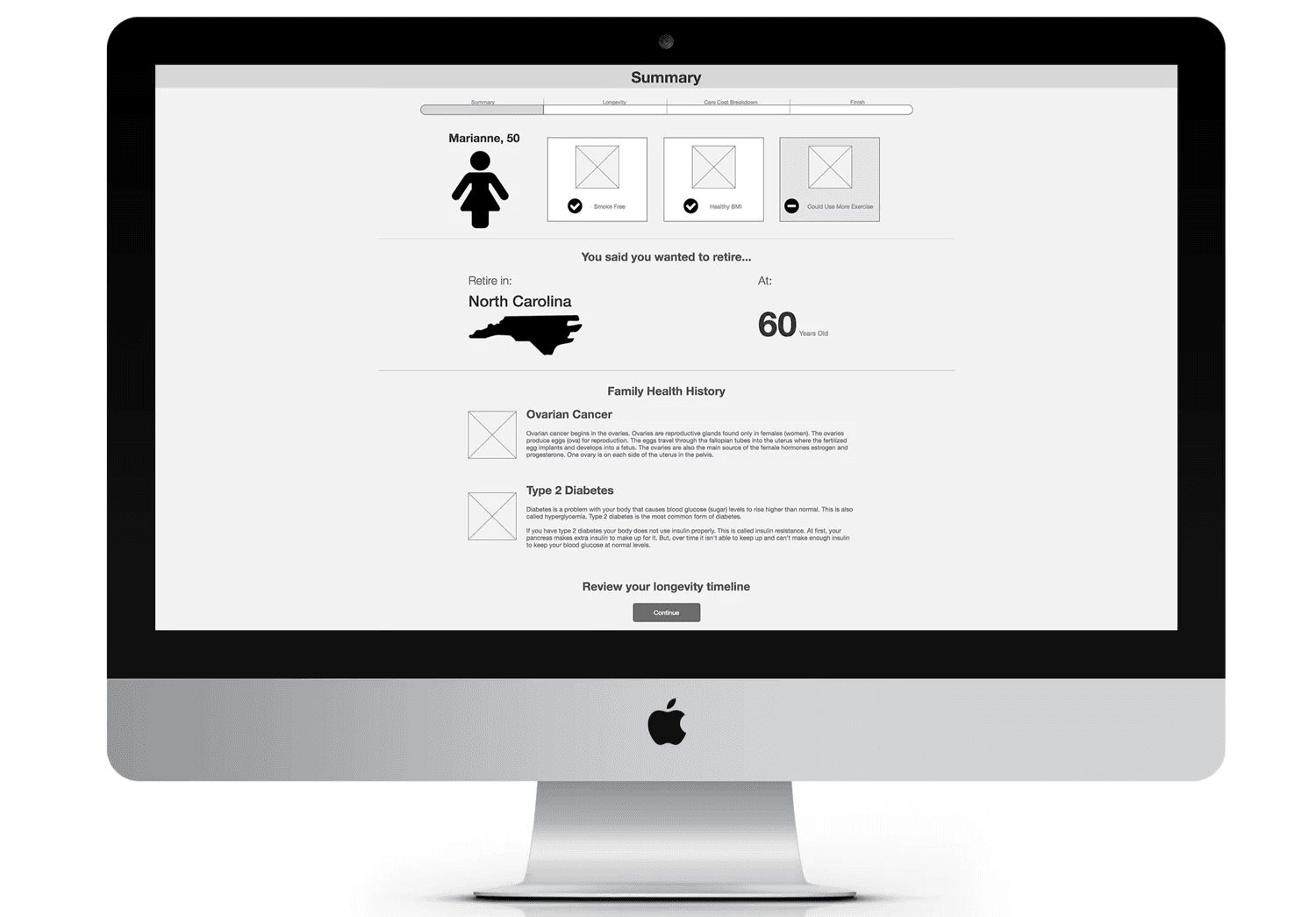
I took all of the key information in a client's summary and made it feel more personal. I also increased legibility by breaking it down into sections and highlighting areas that were connected. This helped users anticipate next steps as they progressed through the experience.
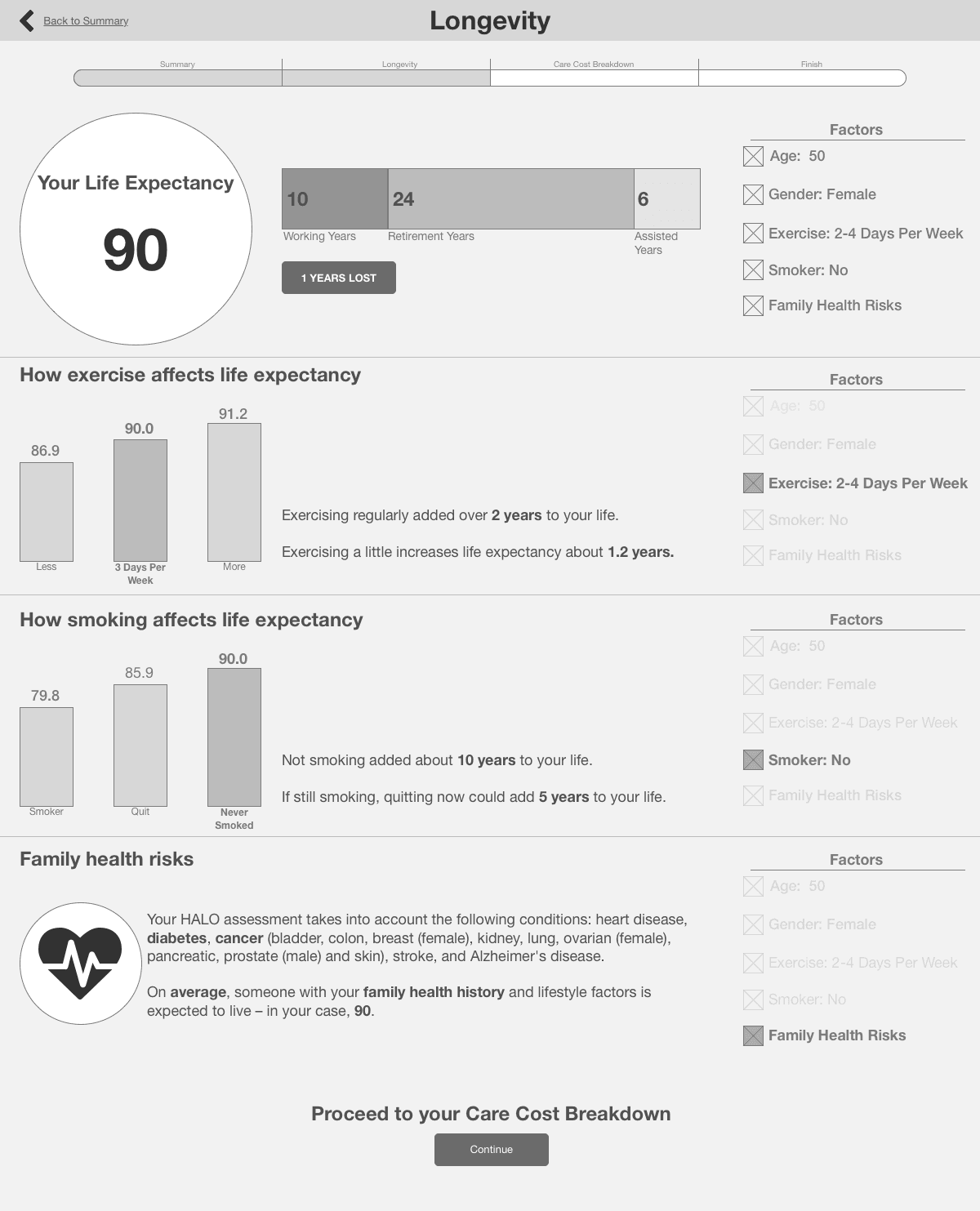
We compartmentalized all the information about longevity and make sure HALO went through that in a more linear methodology rather than it being sprinkled throughout the report when it felt less important or could cause confusion to the client as to why that was important. We made sure sections were focused and clearly defined.
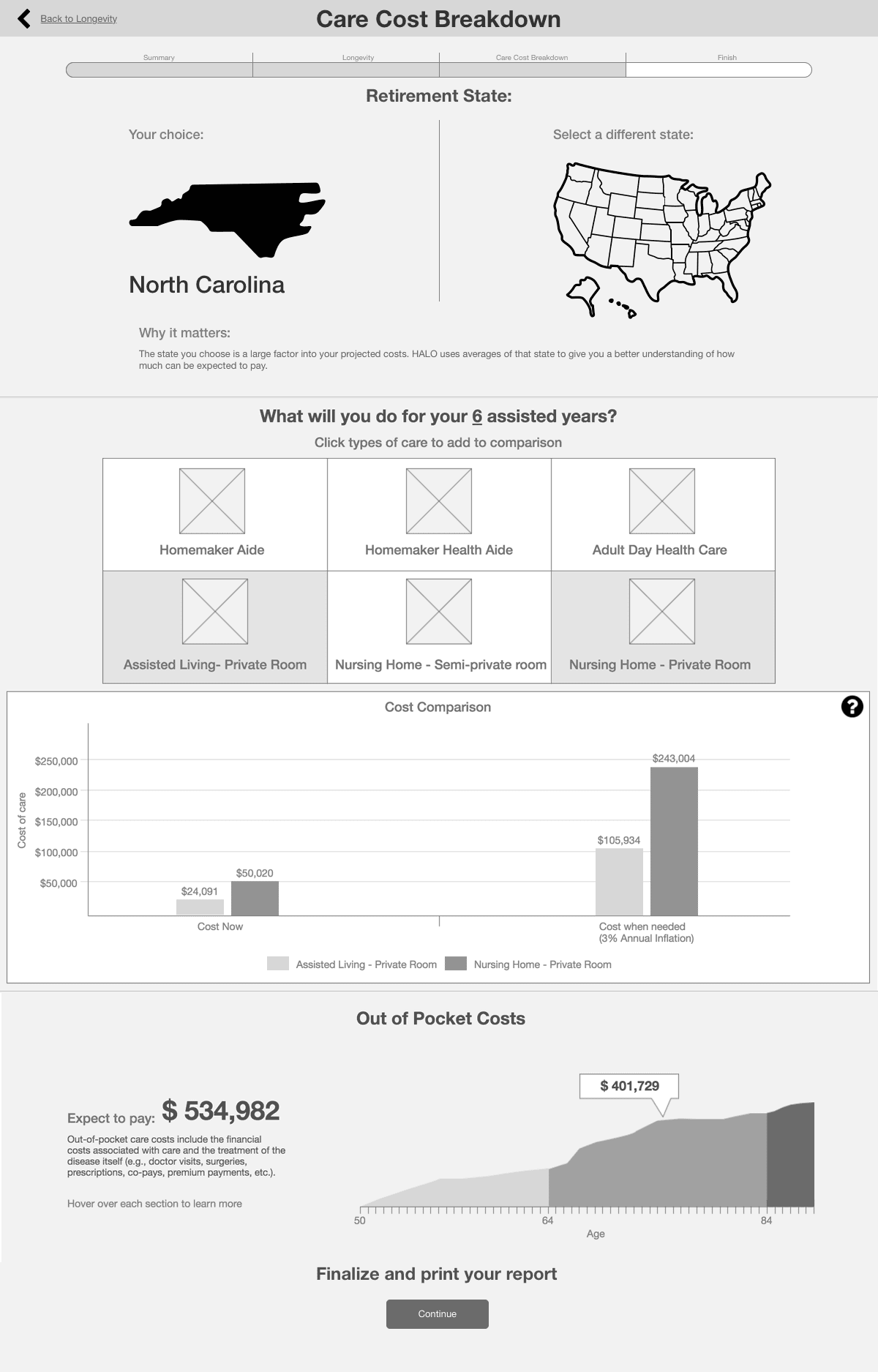
I allowed clients to make changes to the information they originally input into the assessment so they didn’t feel locked into one set path and report. I also gave them the ability to compare what different types of care would cost. I made sure to incorporate triggers that would encourage clients to ask their advisors questions and start taking action.
Overall, clients and advisors were both excited about this new version of the report we had put together. I felt really positive about submitting this MVP to Genivity and presenting a tangible product after 3 strenuous weeks of work. When asked about how our users felt, as they worked through our HALO report, a client of a financial advisor had this to say:
Based on the feedback, we knew our designs were headed in the right direction.
NEXT STEPS
Given the short amount of time we had to work on the project, we put together a list of recommendations for Genivity to look into after handoff:
Emphasizing these areas will help HALO launch its new interactive report in a way that meets user needs and rises above the competition. It'll help financial planners become the holistic advisors their clients are looking for.
LOOKING BACK
For the first time, I got to work on something that had already been created, rather than a product in the conceptual stage. I really appreciated the opportunity to help build and grow something that was already making waves and changing lives. I felt that the work I was doing truly made a difference for the stakeholders and the users.
Working in just a team of two was very different from what I expected. Paul and I had to work fast and work hard constantly. Taking ownership of certain deliverables or tasks was vital to us finishing on time, week after week.
And finally, I learned how to stay open throughout the entire process and prevent myself from scoping down too quickly. Since designing the interactive report was a lot of work already, we didn't have to focus on the assessment portion of the product. But, I still sought out ways to improve it through my heuristic evaluation. I wanted to make sure we left no stone unturned for Genivity and I feel we definitely followed through on that.